Sources checked 1 November 2026. Sam is a worked example written for this article. The cue finder and the swap calculator are illustrative tools, not methods tested in a study.
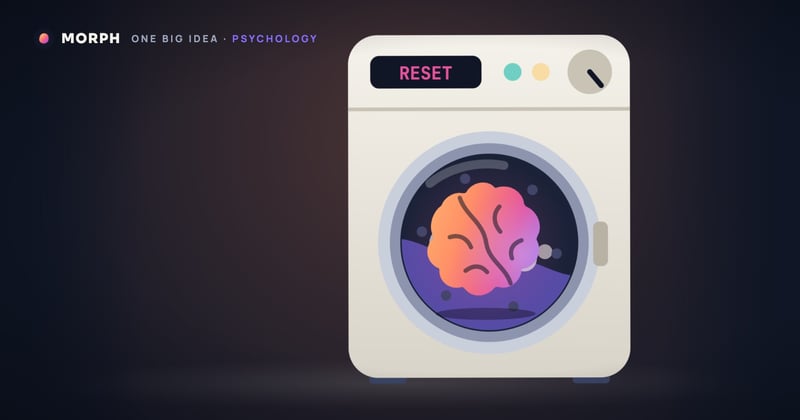
Sam has decided to reset his brain. He read that his phone, his playlists and his evening chocolate have flooded him with dopamine, and that the cure is a detox. So on Saturday morning he deletes his music app, puts the TV remote in a drawer, gives the chocolate to a neighbour and cancels dinner with friends. No films, no podcasts, no sugar, no conversation he doesn't need. He plans to keep it up for a week.
By Saturday afternoon he is bored and irritable. By Sunday night he has picked up his phone eleven times "just to check the time". On Monday he is back to scrolling, now with a sense that he failed at something.
Sam isn't lazy. He followed the instructions the trend gave him. The trouble is that the instructions rest on a mistaken idea of what dopamine is and does. This article walks through what the dopamine detox claims, what the sources actually say, and what is worth keeping from it.
What is a dopamine detox supposed to do?
The idea spread around 2019 under the name "dopamine fasting". The popular version goes like this: modern life (phones, games, junk food, porn, endless video) floods your brain with dopamine; your brain gets used to the flood, so ordinary life feels dull; if you cut out every pleasure for a day or a week, your dopamine "resets" and simple things feel rewarding again.
It is an appealing story. It explains a real feeling, the flatness after hours of scrolling, with a single chemical, and it offers a clear fix that costs nothing. It also sounds scientific, because dopamine is real and really is involved in reward.
The question is whether the mechanism holds up. Can you drain dopamine by avoiding fun? And if you could, would you want to?
Each card summarises a cited source [1]–[5]. Tap to flip.
Is dopamine a toxin?
No. Dopamine is a chemical messenger your own brain makes. It plays a part in movement, memory, motivation, mood and attention [3]. The loss of dopamine-producing cells is what drives the movement problems of Parkinson's disease [3]. A brain without dopamine is not a clean brain; it is a brain that struggles to move and to get going.
That is why Harvard Health's October 2026 explainer is blunt about it. In Do you need a dopamine detox?, Maureen Salamon writes that people's brains need dopamine to function, "so a 'dopamine detox' is not possible" [1]. The word detox implies a poison that builds up and can be flushed out. Dopamine is not that kind of substance.
A second, quieter error sits inside the trend: the belief that dopamine is pleasure. Kent Berridge and Terry Robinson spent years separating two things that feel like one. "Liking" is the enjoyment of a reward. "Wanting" is the pull toward it, the urge to go and get it. In their experiments, mostly in rats, dopamine tracked wanting much more than liking: animals with almost no dopamine still showed normal "liking" reactions to sweet tastes, but no longer worked to get them [5]. So even on its own terms, "too much pleasure, so cut the dopamine" mixes up two separate systems.
Does skipping fun lower your dopamine?
This is the step the whole detox depends on, and it is the step that fails. In a 2020 Harvard Health piece, Peter Grinspoon, MD, put it plainly: dopamine levels rise in response to rewards, but they don't actually decrease when you avoid overstimulating activities [2]. Sitting in a quiet room does not empty a tank.
Grinspoon also described what the trend had turned into: people who were "not eating, exercising, listening to music, socializing, talking more than necessary" in the belief that they were resetting their brain chemistry [2]. He called it a maladaptive fad. Giving up exercise, friends and music doesn't fix a phone habit; it removes some of the healthiest rewards a person has, and often leaves the phone as the easiest one left. That is roughly what happened to Sam on Sunday night.
Answers and explanations come from the cited sources [1][2][6][7].
Where did the idea come from, then?
The term came from Cameron Sepah, a psychiatrist in San Francisco, who published The Definitive Guide to Dopamine Fasting 2.0 in 2019 [4]. His version was much narrower than the one that went viral. It was built on stimulus control, a technique from cognitive behavioural therapy (CBT): you pick a specific behaviour that is causing you trouble (Sepah's examples included things like gaming, shopping, gambling and social media), and you limit the cues and the times that set it off [4].
As Harvard Health reported, Sepah has said the word dopamine was a catchy label for how such habits get reinforced: "The title's not to be taken literally" [2]. The goal was never to lower a chemical. It was to make a particular habit less automatic. Somewhere between his guide and social media, "limit the one behaviour that's hurting you" became "stop enjoying anything", which is close to the opposite of what CBT asks.
The original idea also has a weakness worth being honest about: no study has tested "dopamine fasting" as a named programme. What has research behind it is the underlying toolkit, CBT and stimulus control, which is used for problem behaviours such as gambling and compulsive internet use.
What actually drives the scrolling?
If not a dopamine overload, what keeps Sam picking up his phone? Mostly, cues.
Psychologists Wendy Wood and David Neal reviewed decades of research on habits and described them as responses that are triggered by the context they usually happen in: a place, a time, a preceding action, a mood [6]. Once a habit is strong, the cue sets it off with little intention involved. Sam's hand moves toward the phone when he sits on the sofa, when a notification buzzes, when a task gets hard, when he lies down at night. The decision happens after the hand is already moving.
This explains why willpower-only plans so often collapse, and why the detox felt so bad. Sam removed his pleasures but kept every cue: the phone was still on the table, still buzzing, still the first thing within reach in every quiet moment. Meanwhile the alternatives he might have reached for, music, a friend, a run, were exactly the things he had banned.
Harvard Health's 2026 advice points at this instead of at dopamine: people "should instead change habits and environments that draw them to their devices" [1]. The target is the cue and the routine around it, not the chemistry.
An illustrative tool built on stimulus control [4][6], not a tested programme. Nothing you choose is stored or sent.
Does cutting back help if quitting doesn't?
There is reasonable evidence that it can. In a 2018 experiment, Melissa Hunt and colleagues at the University of Pennsylvania randomly assigned 143 undergraduates either to keep using Facebook, Instagram and Snapchat as usual or to limit each app to 10 minutes a day, about 30 minutes in total, for three weeks [7]. The limited group reported larger falls in loneliness and depression than the control group. Both groups reported less anxiety and less fear of missing out, which the authors put down to simply tracking their use [7].
The caveats matter. It was one study, with students, over three weeks, and it measured self-reported feelings rather than anything in the brain. It does not show that 30 minutes is a magic number. But notice what the students did: they cut back on a specific behaviour and kept everything else in their lives. Nobody was asked to give up music, food or friends.
That is the useful core of the "detox", stripped of the dopamine story: choose the behaviour that is costing you, make its cues harder to hit, and leave room for other rewards.
What should Sam do instead?
Sam doesn't need less dopamine. He needs more control over a few habits. In practice that means three moves.
Name the moment. Not "my phone is a problem" but "I scroll for an hour in bed" or "I open social apps every time work gets hard". A specific cue is something you can change.
Move the cue. Charge the phone outside the bedroom. Switch off notifications that don't come from a person. Take feed apps off the home screen. Put the phone in another room for one focused work block. Each of these makes the automatic path a little longer, which is what stimulus control is for [4][6].
Swap, don't starve. Replace one scroll session with something you actually enjoy: a walk, a hobby, a call or a meal with a friend. Keep the healthy pleasures. Music, a good film and a piece of chocolate were never Sam's problem, and they make the swap easier to stick with.
A worked example (simple arithmetic). The 30-minute marker is the limit tested by Hunt et al. (2018) [7], not a recommended number.
So, do you need a dopamine detox?
You can't have one: your brain needs dopamine, and a quiet weekend doesn't drain it [1][2]. What you can do is notice which cues pull you into habits you don't want, make those cues harder to hit, and put better rewards within reach. That is less dramatic than a reset, and it is the part of the idea that has evidence behind it.
Start with one moment this week. Pick the time of day when your hand reaches for the phone without asking you, change one thing about the cue, and have a swap ready.
Sources
Salamon, M. (2026, October 14). Do you need a dopamine detox? Harvard Health Publishing, Harvard Women's Health Watch; medically reviewed by Andrew E. Budson, MD. Most of the article is for subscribers; the quotes here come from its public summary.
Grinspoon, P. (2020, February 26). Dopamine fasting: Misunderstanding science spawns a maladaptive fad. Harvard Health Blog. A physician's commentary, not a study; includes Cameron Sepah's comment on the name.
Cleveland Clinic. Dopamine. Health Library. A general reference on dopamine's roles; it notes that no neurotransmitter works in isolation.
Sepah, C. (2019). The definitive guide to dopamine fasting 2.0: The hot Silicon Valley trend. Medium. The creator's own description of the method; it is a guide, not a trial, and no study has tested "dopamine fasting" by name.
Berridge, K. C., & Robinson, T. E. (1998). What is the role of dopamine in reward: hedonic impact, reward learning, or incentive salience? Brain Research Reviews, 28(3), 309–369. Mostly animal research; how wanting and liking work in humans is still debated.
Wood, W., & Neal, D. T. (2007). A new look at habits and the habit–goal interface. Psychological Review, 114(4), 843–863. A theoretical review of habit research, not a test of any single intervention.
Hunt, M. G., Marx, R., Lipson, C., & Young, J. (2018). No more FOMO: Limiting social media decreases loneliness and depression. Journal of Social and Clinical Psychology, 37(10), 751–768. 143 undergraduates, three weeks, self-reported measures; it did not find changes in self-esteem or social support in that time.
Watch the episode
One email when we publish. Research, product decisions, and what teams report back.